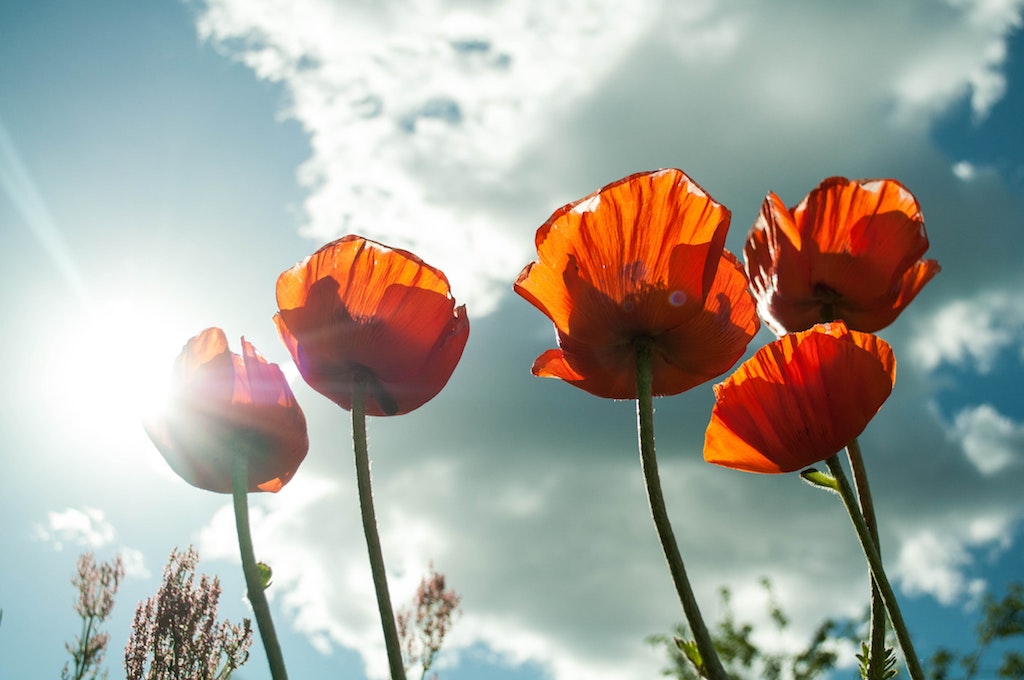
The 29th September marks the feast of St Michael, the Archangel, or greatest of the angels – guardian against evil and darkness. This day is also known as Michaelmas and is used by many universities as the name of the autumn term. It is one of the quarter days, when rents used to be paid and debts settled. It comes close to the autumn equinox, when days and nights are of equal length. In the northern hemisphere summer will be fading, autumn draws on and the earth faces the onset of winter. Michaelmas coincides with a time of energy different to that of spring, when everything is bursting into life. Now, as fruits ripen, leaves turn colour and fall, the earth seems to draw in on itself. Energy is focussed inwards and downwards; plants close down their growing cycle and instead rebuild reserves for the next cycle of flourishing in the following year.
St Michael defeats Satan
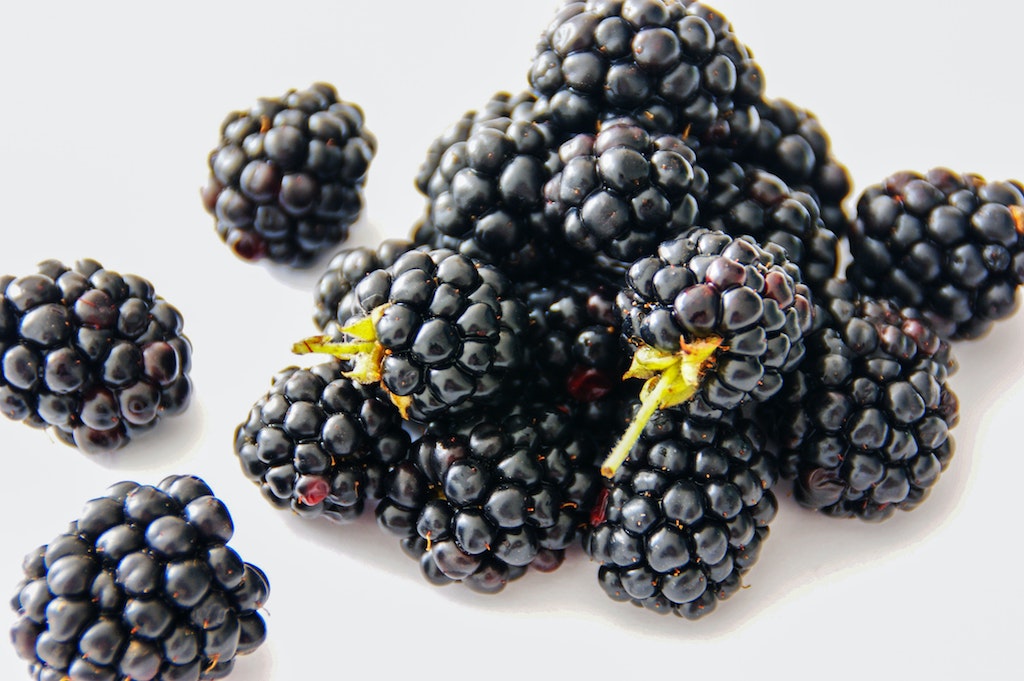
Legend has it that St Michael fought – and won – a battle against Satan, casting him out of heaven. Satan fell to earth – and landed in a blackberry bush. He was so incensed that he spat on the blackberries, cursing them and giving rise to the belief that it was bad luck to pick and eat blackberries after this date. Instead they should be left as food for birds and other wildlife at a time when natural food supplies were fading.
Delicious fruit – but watch for the thorns!
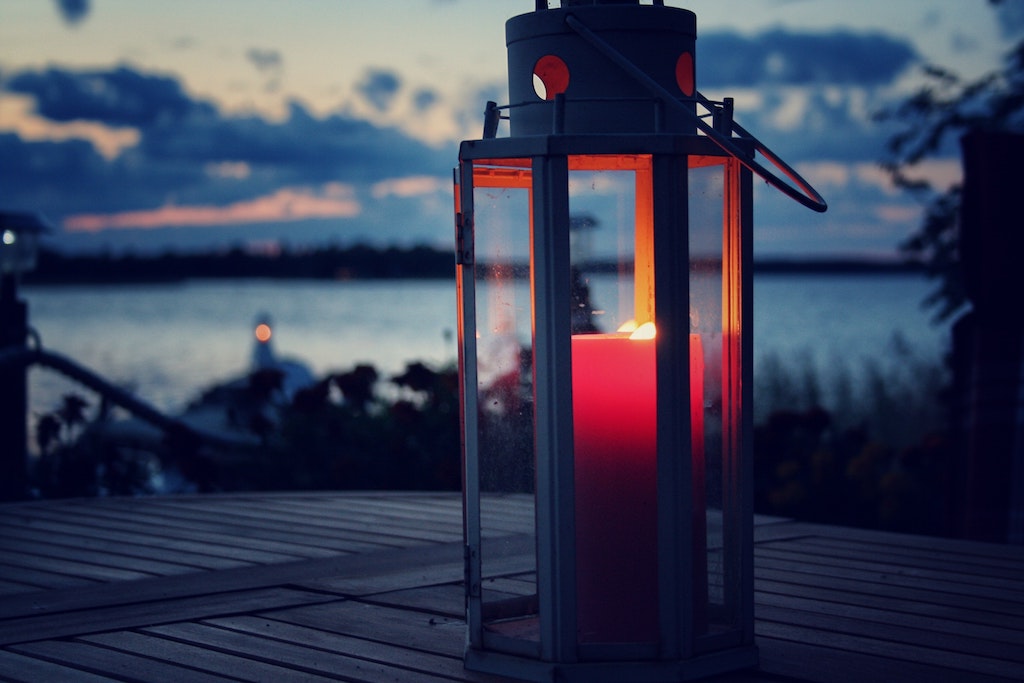
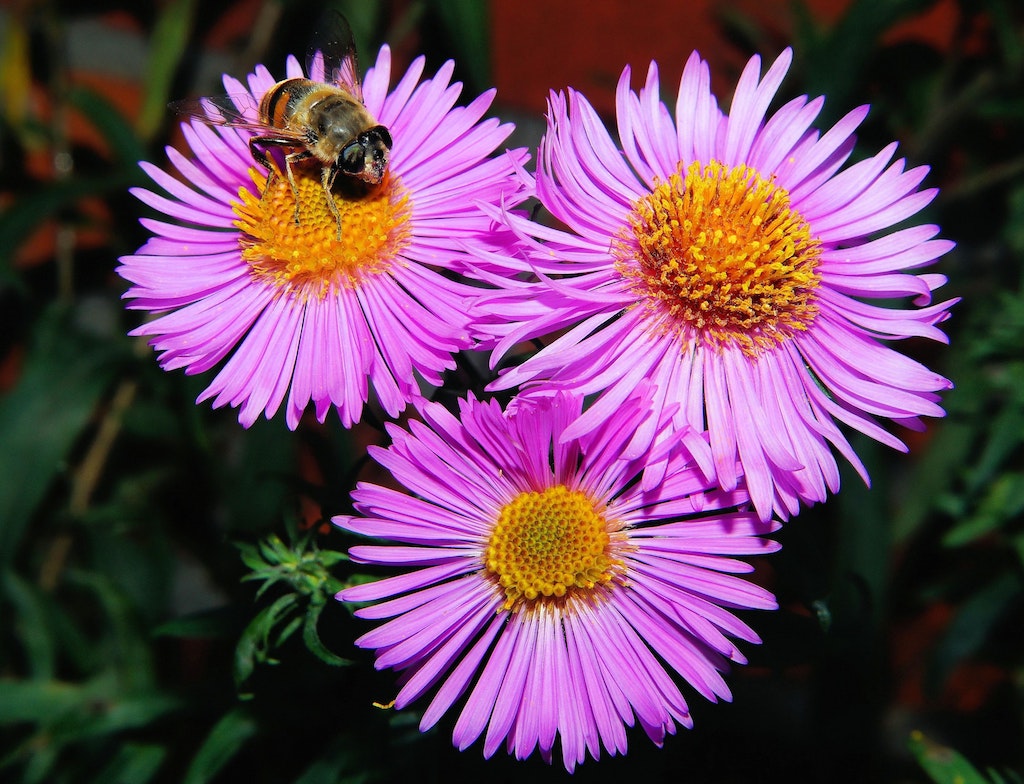
The Michaelmas Daisy flowers at this time – one of the last blooms of summer. The colouring is warm, gentle and glowing – a symbol of light in the fading gloom, just as indoor lamps and fires will guard against the darkness and chill of approaching winter.
When a seasonal heatwave seems to last an uncomfortably long time (especially when we’re not used to it!) it can be difficult to find relief from relentless sun, unusual temperatures and high humidity.
Relentless sun…
Cue the traditional but exotic lavender plant (of which there are many varieties.) A favourite in many countries lavender is native to the Mediterranean and wasn’t grown in England until the 16th century. Beloved of the ancient Greeks it was known as Nardus after the Syrian city Naarda, close to the banks of the Euphrates. Legend has it that this was the herb St Mark referred to as ‘spikenard’ in the Bible, used for producing aromatic oils for anointing and embalming. Whatever its origins and history lavender is now a delightful staple of English gardens.
Lavender – historic, soothing and fragrant
In his book RHS Companion to Scented Plants the garden specialist Stephen Lacey writes, ‘Lavenders have one of the most pleasant and nostalgic of herb scents, and on a hot summer’s day it can infuse the air and transport you to dry hillsides of southern Europe.’
…dry hillsides of southern Europe; perfect for growing lavender
The sight of its grey-green foliage and the stunning hues of its flowers – purple, white, deep blue and pale mauve – create a sense of well-being and calm, whether it is used as formal hedges and edging, or as a specimen plant in a tranquil corner of the garden.
Small lavender in shady tranquil corner of garden
And then, there’s the perfume…
Long known for its exquisite scent lavender has been used medicinally, cosmetically and in cooking. Lavender water is one of those traditional remedies that no home would dream of being without. Dabbed on the forehead it can bring relief from headaches and stress; it promotes a feeling of calm, tranquility and well-being. Lavender tea has a calming effect and a few drops of lavender oil added to a night-time bath or onto a pillow helps promote relaxation and sleep.
Gentle soothing lavender
In days past, young girls in needlework classes would often find that one of their early projects would be sewing a simple lavender sachet and filling it with dried lavender flowers from their gardens. This simple skill has become an art form; ‘children of any age’ now design interesting and imaginative lavender bags, or blend pot pourri for scenting rooms, drawers and cupboards – an ancient craft far more subtle and evocative than many artificial proprietary sprays and air-fresheners.
Delightful for scenting rooms, drawers and cupboards
Lavender-scented sugar used to be made by pounding lavender flowers with three times their weight of sugar. Cooking with lavender fell out of favour for a while but it now enjoys renewed popularity and recipes for cakes, biscuits, desserts – even roasts such as lamb – are now widely available.
Lavender – increasingly used in cookery
So next time you’re feeling the heat rub a sprig of lavender between your fingers and enjoy the instant cooling balm and relief it brings. Not for nothing did the street sellers of London cry:
Here’s your sweet Lavender, sixteen sprigs a penny,
Which you’ll find, my ladies, will smell sweet as any.
It is at this time of the year that peonies come into their full glory. Full blown flowers with voluptuous blooms like glamorous ball gowns or a ballet dancer’s tutu. Layers of delicate petals and a triumph of scent wafting on the early morning air. The tight buds seem to burst forth in an extravagant explosion of flower – delighting in the spring air and eager to show off their charm and glory.
Peony in full flower
DH Lawrence paints an evocative impression of peonies in his poem A Baby Running Barefoot. Reading it you can almost feel the soft skin of a child’s foot, the tender silken smoothness that can never be recaptured in later life. Very much a flower of the moment the peony flower cannot linger but seems almost heaven sent whilst it lasts.
A Baby Running BarefootWhen the bare feet of the baby beat across the grass
The little white feet nod like white flowers in the wind,
They poise and run like ripples lapping across the water;
And the sight of their white play among the grass
Is like a little robin’s song, winsome,
Or as two white butterflies settle in the cup of one flower
For a moment, then away with a flutter of wings.
I long for the baby to wander hither to me
Like a wind-shadow wandering over the water,
So that she can stand on my knee
With her little bare feet in my hands,
Cool like syringa buds,
Firm and silken like pink young peony flowers.
DH Lawrence
‘…like pink young peony flowers’
In Greek mythology Paeon studied under Aesculapius, the god of medicine. However, when Paeon cured Pluto by using a peony root after he had been wounded in a battle with Hercules Aesculapius was enraged and tried to kill Paeon out of jealousy. Pluto saved Paeon by transforming him into the peony flower as he knew that its beauty would be praised and admired. Thus the peony came to represent the quality of compassion.
In another legend, the nymph Paeonia caught the eye of Apollo – he began to flirt with her. Embarrassed, she blushed and turned bright red. Aphrodite, Apollo’s ‘other half’ realised what was going on and, in a fit of rage and jealousy, she turned Paeonia into the red peony we know today. So the peony also stands for bashfulness.
The flowers of the red peony stand for bashfulness
The Chinese, too, tell a story in which a beautiful, but wilful, empress one winters day used her powers of magic to order all the flowers in her garden to bloom. Every flower obeyed, with the exception of the peony. Furious, the empress banished all the peonies in her garden to the coldest and most hostile parts of her empire. But the peony survived, bloomed and produced such a display of wonderful flowers that all were astounded. The empress realised that she had been defeated and allowed the peony to return, naming the plant the ‘Queen of all Flowers.’
The peony was a popular medicinal herb in Europe until the sixteenth century but is seldom used today. The herbalist, Culpepper, recognised two variants, one for treating male complaints and one for female problems. It is also used in Chinese medicine – again with different varieties for different ailments, such as liver and circulation, eczema and ‘cooling the blood.’ None of these should be tried without proper medical advice. However, we can all benefit from the beauty of the plant and its exquisite scent – true balm for the soul.
True balm for the soul…
The peony has been captured in many art- and craft-forms. Embroidery lends itself to some of the most exquisite representations. For a demonstration of this now’s the time to relax, indulge yourself for a few moments and enjoy the following video from Malina GM Embroidery:
Click the image to see the video (opens in new tab).