The Vernal Equinox pulls us into Spring

The Vernal Equinox ushers in a joyful time of growth, rebirth and renewal. With luck, the weather will be turning. The cold gloom of winter will be a memory. Thoughts will turn to the fresh new green foliage bursting forth on the hedgerows and there’ll be a real sense of warmth in the sunlight.

Spring sun arrives at last, bringing light and warmth
The arrival of spring light brings warmth at last

This year, Easter peeps around the corner. Beautiful hellebores seem to have a foot in both winter and spring; their alternative names are Christmas Rose or Lenten Rose, perhaps because they flower copiously throughout both seasons. Olive trees now put on fresh vigorous growth. Once it was a tree that could only be grown with tender care in our fickle climate but now they seem to thrive, even if their fruit is not always evident.

The leaves of an olive tree wave gently in the breeze
Silvery grey leaves of an olive tree wave in the breeze

The Hellebore gets its name from the Greek and a literal translation gives us ‘injures food.’ The Greeks used the plant as a poison – in food, and by adding it to a besieged city’s water supply. It holds a shadowy place in the flower world – half in spring, half in winter. Legend suggests that it sprang from the tears of a young girl who visited the Christ child at his birth but who had no gift to offer. As her tears fell, these beautiful white flowers sprang into being.

White petals resemble tears from a young girl who found she had no gift to offer the Christ child
The white petals resemble tears shed by a young girl who found she had no gift to offer the Christ child at his birth

Another legend claims that witches used the hellebore for flying and making themselves invisible. They would grind the flower into a powder, walk in it – and disappear! An ointment created from hellebore and fat, rubbed into the skin, would enable a witch to fly… or, at least, to believe that they might do so.

A broomstick leaning against a wall awaits its passenger
A broomstick awaits its passenger…

But the hellebore also stands for hope. It blooms in the dark of winter to remind us that spring will come and no matter how tough life might be there is something stronger pushing back.

The beauty of hellebores stand for hope
Hellebores: eternal symbols of hope

Olive trees are just as fascinating. Fossil evidence suggests that the olive has existed on our planet for between twenty and forty million years. Many ancient specimens exist – indeed it’s quite possible that some of the gnarled old trees in Gethsemane would have witnessed the agony of Christ in the garden just before his trial and crucifixion. The Hebrew word gatshmanim means ‘oil press’ and the name ‘Gethsemane’ means ‘garden with the olive press.’ Olive oil was used for cooking, for providing light and for anointing – it has long been held sacred and of great value.

A glass flask containing a quantity of precious olive oli
A flask holding a precious quantity of olive oil

It was an olive twig that the dove brought to Noah at the end of the great flood – ever since sprigs of this beautiful tree have been emblems of peace and reconciliation.

A twig from an olive tree symbolises peace and reconciliation
Symbol of peace and reconciliation

One guidebook for the Holy Land describes an olive orchard like this:

The lightest breeze crowns the olive trees with a silver halo that moves like a wave of light over the trees as the wind inverts the leaves. The underside of each olive leaf is covered with tiny whitish scales, while its upper side is green. When the wind rustles the leaves of the olive tree, this contrast of shades produces a unique silvery sheen. The light of the olive tree itself, together with the clear white flame produced by burning olive oil, made the olive the symbol of ‘light of the world,’ a symbol that helps explain Zechariah’s vision of the menorah.’
A family gather around a menorah
The Menorah – a sacred light

Look around you as spring advances and delight in all the signs of fresh growth and new life.

A Month of Marching Contrasts

A host of shining daffodils
Daffodils come crowding in as March bursts in

March is a strange month – one foot in winter and one foot in spring.

Sudden snow covers the garden
A sudden coat of snow

If the sun shines you can really feel the warmth. Turning to face the sun, you can feel the rays caressing your cheek like a gentle blessing. Spring blossom cascades over hedgerows, brightening twigs that have long looked drab over the winter months.

A cascade of blossom on grey twigs
White blossom brightens the hedgerows

‘Take note of the courageous daffodils that emerge no matter what the weather throws at them. Now is the time to push our own heads up and out of the soil in the knowledge that we are deeply rooted. It’s time to dare to share our calling with the world, to take risks and journey forth.’ (Louise Press)

A clump of daffodils emerges bavely from the soil
Brave daffodils emerge from winter’s hard soil

Plants, bushes and trees put forth tentative shoots and blossom buds – but then, as one writer has said, – ‘March responds carelessly, brutishly, showering them one day in snow, the next in rain, then in warm, glowing, impossibly gorgeous sunshine, then in snow again.’

Solitary figure fighting a way through the snow
A figure trudges through a sudden fall of snow

But perhaps the animal kingdom has more faith – March sees the birds beginning to nest.

A bird brings food back to the nest for hungry mouths
Birds build intricate nests for raising their broods

Early lambs will be let out into the open.

Young lambs are let out into the open.
Lambs explore the great outdoors

Truly, the beginning of spring is gentle and violent; chilly and balmy; joyous and fiercesome. Truly a month of contrasts.

Tulips and boots - symbols of the contrary nature of spring.
What will spring hold in store for you?

The emergence of spring…

February sees the first real signs of spring as it emerges from hibernation.

February sees the first real signs of spring beginning to emerge. Gardens and wayside verges that have looked bleak, bare and uninspiring are gradually being disturbed by new, tender shoots pushing up through the packed soil and winter debris.

Now is the time to look out for nectar-rich plants, whose gift is to provide food and nourishment for the insects at the bottom of the food chain – those which in turn sustain birds, bats and hedgehogs.

Look out for the following plants; admire their unassuming beauty and value their contribution to the amazing way in which wildlife is sustained.

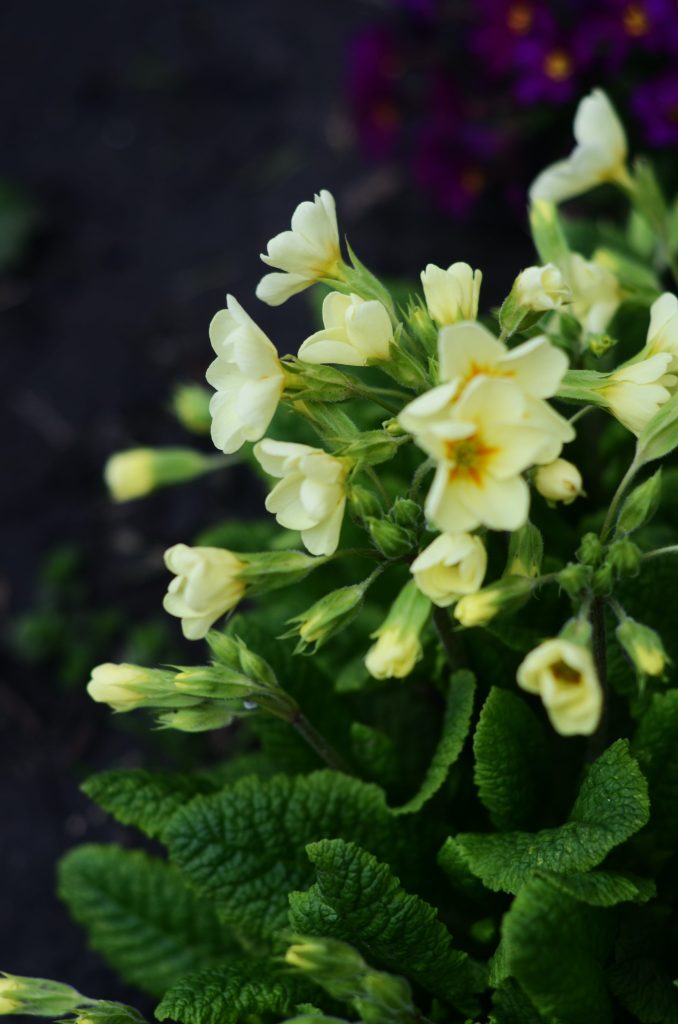
The primrose is often one of the earliest flowers to emerge, its shy, pale yellow flowers peeping out from spear-shaped leaves. Watch for early bumble bees seeking out this delicate flower…

The pale yellow of the primrose offers a ghostly glow to the spring garden.
Shy primroses peep forth as daylight beckons.

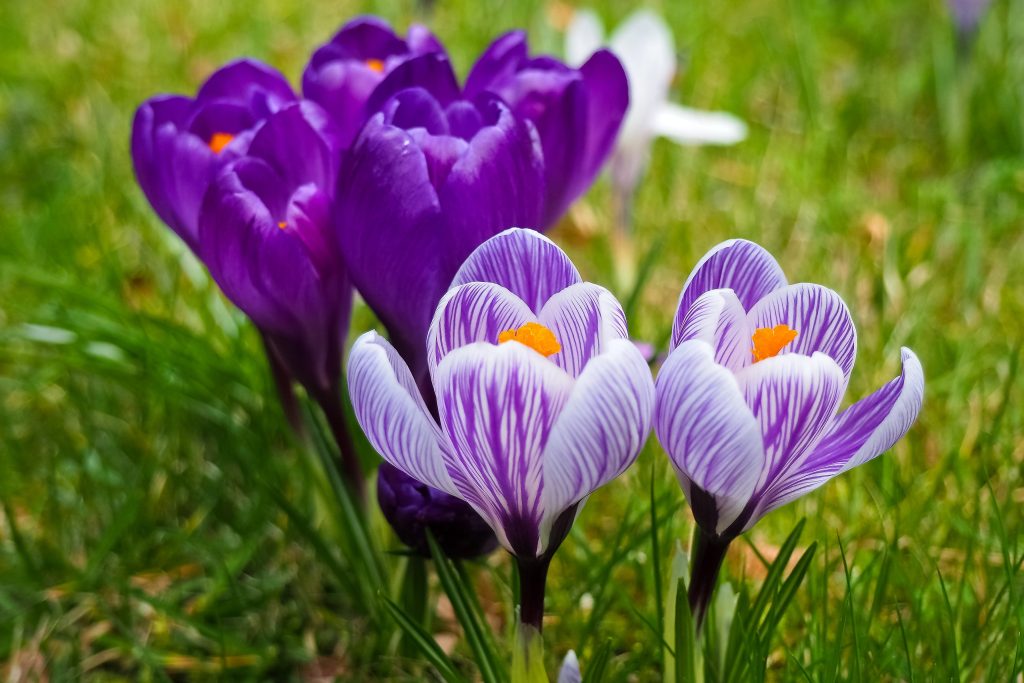
If one crocus flower springs up you can be sure that more will follow… an early-flowering bulb and a rich source of nectar. Planted close to fruit trees they will encourage insects to come close and pollinate fruit blossom when that makes its glorious appearance a little later in the spring.

Bold crocus push up through grass and flower beds
Crocus spring up in all sorts of places

The grape hyacinth is frequently seen now. It seems to pop up almost anywhere in a garden once it is established, its bright blue spikes of numerous tiny blue flowers making it look like a miniature bunch of grapes. A welcome source of nectar for foraging insects!

A sudden flash of blue from grape hyacinths shows a welcome burst of life.
Grape hyacinths bring a splash of startling blue

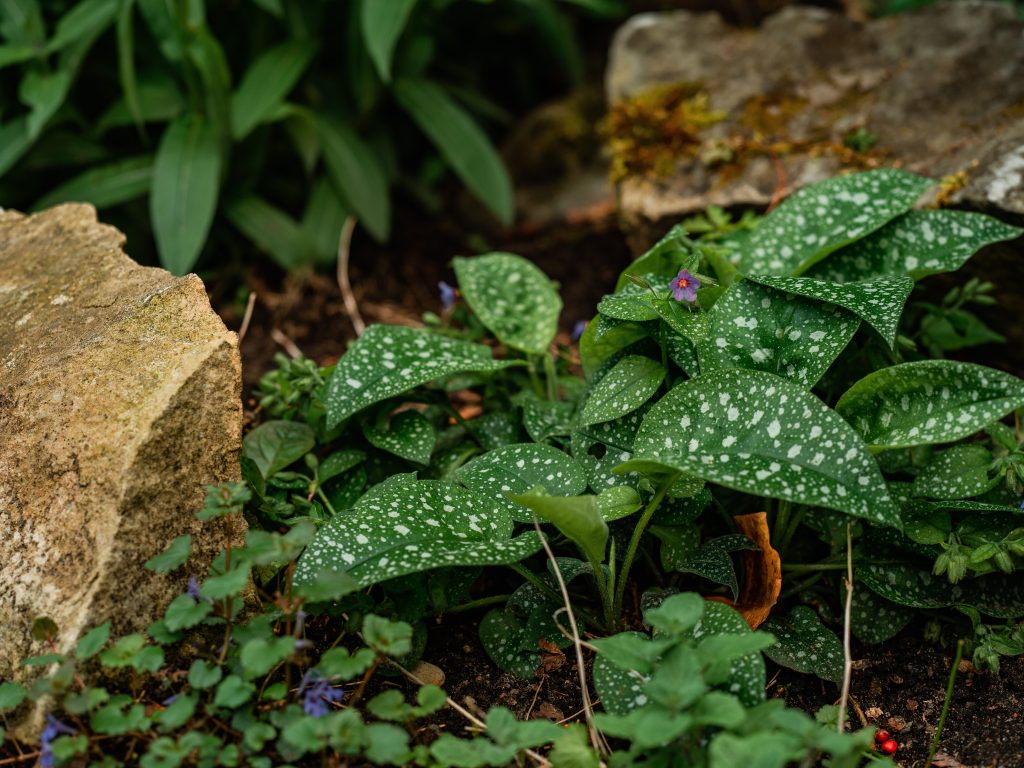
Lungwort, or pulmonaria officinalis, displays pretty, pollen-heavy flowers that are irresistible to insects. Traditionally used as a remedy to help colds, coughs and asthma, the high mucilage content also helped treat a variety of chest conditions. (Warning: never use plants medicinally to treat ailments unsupervised.) Sight and smell, however, may be freely enjoyed!

Lungwort flowers peep through unusual foliage.
The unusual markings of lungwort conceal it’s pretty flowers

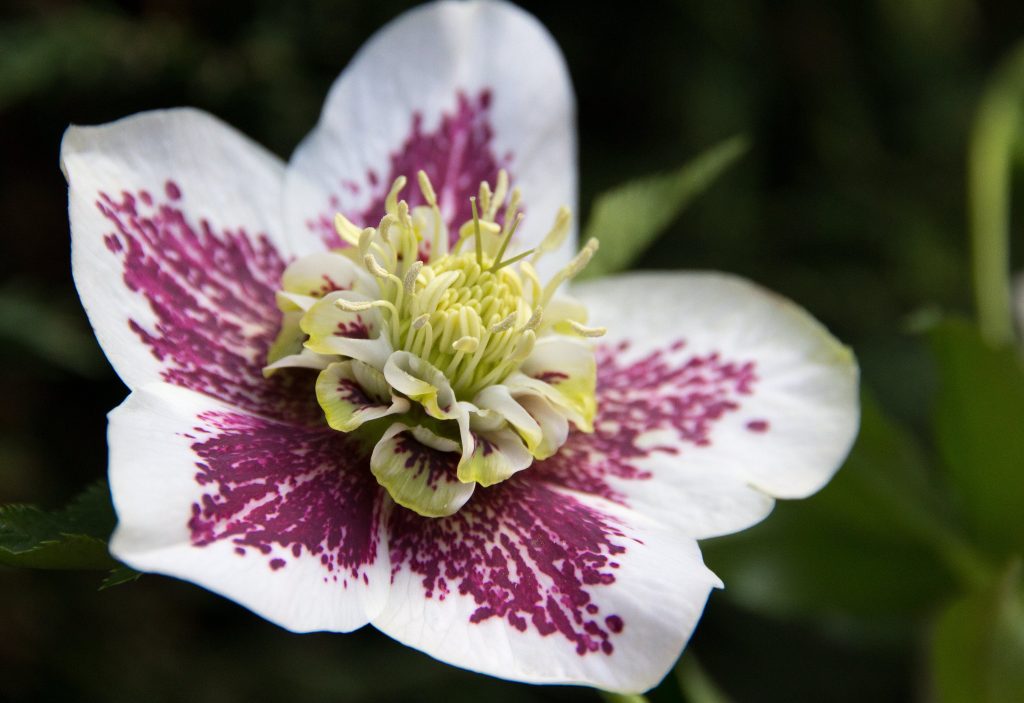
Peeping shyly through winter overgrowth you might spy the hellebore, or Christmas Rose. It’s also known as the Lenten Rose since it often doesn’t come into flower until the Lenten season. It is welcomed by bumble bees but less so by deer and rabbits for whom its leaves are poisonous. One writer has described its flowers thus: ‘their finely modelled bowls indulge in all manner of strange freakings, frecklings, cloudings, stripings and blotching… every individual flower a fantasia of its own caprice.’ In other words, every flower is different!

Hellebore flowers come with all manner of weird and wonderful markings.
A fantasia of its own caprice’

But look for yourself and simply enjoy the rich array of unsung beauties in the early spring garden.

Pilgrim's Perch
Privacy Overview

This website uses cookies so that we can provide you with the best user experience possible. Cookie information is stored in your browser and performs functions such as recognising you when you return to our website and helping our team to understand which sections of the website you find most interesting and useful.